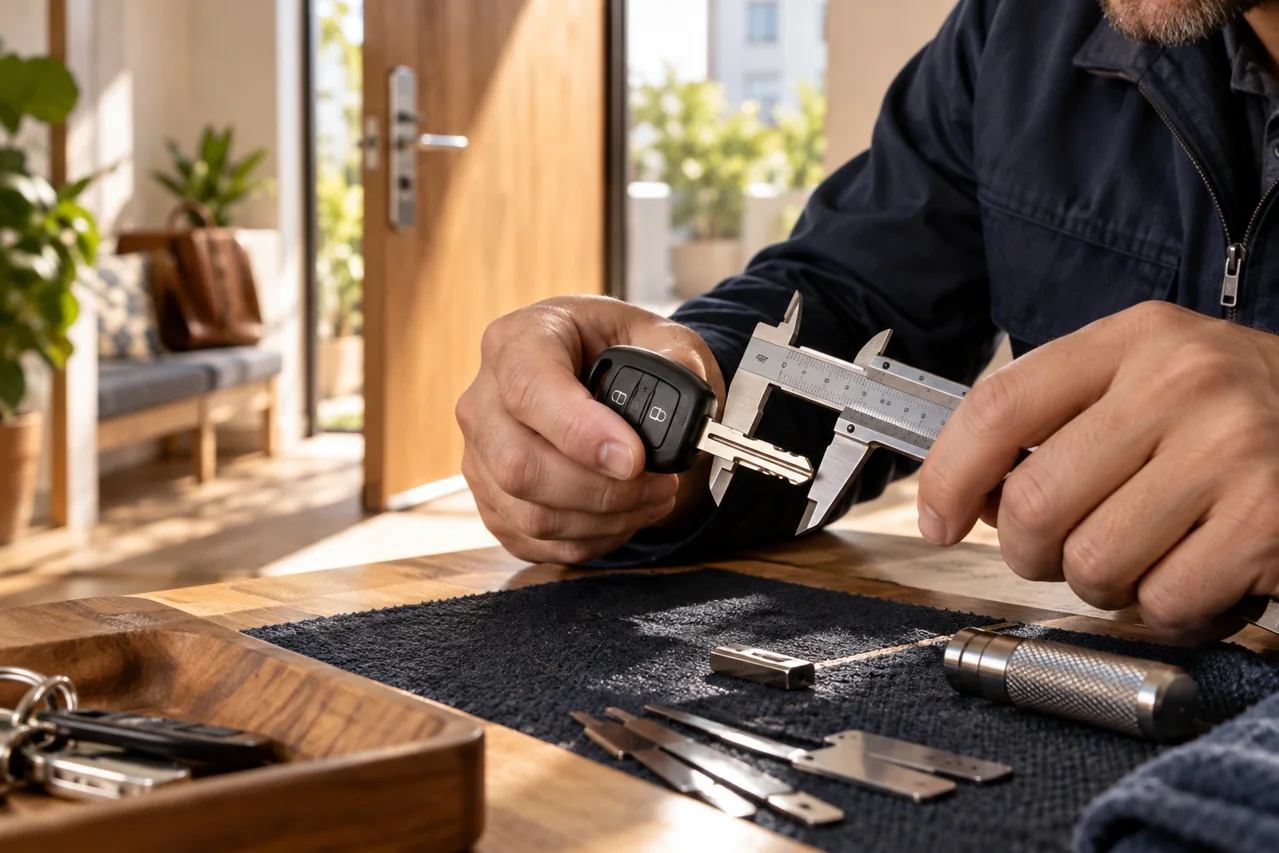
What an immobilizer actually does
An immobilizer is a security system built into the vehicle. Its job is simple to state: stop the engine from running unless the correct key is present. It does this by linking the key to the vehicle computer. When you turn the ignition or press the start button, the car checks whether the key is genuine. If it is, the computer allows fuel delivery and ignition to work. If it is not, the engine is disabled, even if the starter motor spins.
The system works quietly. You do not press anything or enter any code. The check happens automatically in a fraction of a second every time you start the car. Because of this, many drivers never think about the immobilizer until something goes wrong, such as a key that turns but will not start the engine, or a flashing light that appears on the dash.
The idea is easy to compare to a lock on a door. A physical lock keeps people out unless they have the right blade. An immobilizer is a second lock, an electronic one, that stays shut even if the first lock is opened with the wrong tool. A thief who defeats the mechanical lock still faces the electronic one, and that combination raised the difficulty of stealing cars considerably.
A short history of why immobilizers exist
Before electronic immobilizers, car theft was relatively simple. A thief could open a door with a tool, break the steering column cover and start the engine by connecting wires, a method often called hot-wiring. Cars with plain mechanical keys offered little resistance, and a lost key meant that anyone who found it and the car could drive away.
In response, manufacturers began adding electronic security that linked the key to the engine. Early systems used simple coded chips. Over time the codes became more complex, and many systems moved to codes that change with each use. Insurance companies and governments in several regions encouraged or required immobilizers, and they spread through the market until they became standard on nearly all new vehicles.
The results were noticeable. Theft of cars that rely on simple mechanical entry fell sharply where immobilizers became standard. Thieves adapted, and today they often target keys, fobs or the electronic systems themselves rather than trying to start the car without a key. That is why key security, including where you keep your fob, matters more than ever.
How the parts work together
There are three main parts. The first is the key, which carries a transponder chip or, in a smart key, a coded radio circuit. The second is a receiver, often an antenna ring around the ignition cylinder or antennas placed around the cabin on smart key cars. The third is the vehicle computer, which stores the list of accepted key codes and makes the decision.
When you start the car, the receiver sends out a small signal. The key answers with its code. The computer compares the answer with its list. If there is a match, it releases the engine. If there is no match, it keeps the engine locked out and, in many cars, turns on the dash light that tells you something is wrong.
This is why the key and the car have to be taught to recognize each other. A new key does not work out of the box. Our guide on how key programming works explains the teaching process, and our overview of how modern car keys work shows what is inside the key.
Why a copy without a chip cannot start the car
This is the part that surprises people most. You can have a key cut that matches the lock perfectly. It slides in, it turns, and the dash lights come on. Then the engine will not start. The reason is the immobilizer: the car looked for a coded answer from the chip and received silence, so it kept the engine disabled.
In some cars, the engine will crank for a second or two and then stop. In others, it will not crank at all. Either behavior can mean the same thing. The key is mechanically correct and electronically unknown. A chip that is present but not programmed to the car gives the same result.
That is why buying a blank key from a counter or an online store is not enough on its own. The blank must carry the correct type of chip, and the car must be taught to accept that chip. A technician brings the right blank and the programming equipment, and verifies that the new key starts the engine before leaving.
What the security light on your dash means
Most cars have a small indicator that relates to the immobilizer. It may look like a car with a key or a padlock inside it, or it may be a simple key symbol. Its behavior tells you something. On many cars, the light flashes when the car is parked and locked, which is a normal sign that the system is armed. When you start the car with the right key, the light turns off.
If the light stays on or flashes after you try to start the car, the system is telling you that it did not accept the key. Possible causes include a missing or damaged chip, a key that has not been programmed, a weak key battery on a smart key, interference from another key or device on the ring, or a fault in the receiver or computer.
Our page on immobilizer light flashing explains what to look at in more detail. If you see the light, note whether it is steady or flashing, what the car does when you turn the key, and whether you have a spare key. That information helps a technician understand what is happening before they arrive.
Safe things to try if the immobilizer light appears
Some simple, safe checks are worth trying. First, try a spare key if you have one. If the spare starts the car, the problem is the first key rather than the car. Second, remove any extra keys and fobs from the ring and try again, since another chip on the ring can confuse the reader. Third, check the key for visible damage such as a cracked head or a missing cap.
Fourth, on a smart key car, try the backup start position. Many cars have a marked spot where holding the fob lets the car read it even if the battery is weak. Your owner manual shows the location. Fifth, check the car battery: weak voltage can cause odd behavior in security systems.
Do not try to disconnect parts under the dash, pull fuses to bypass the system or force the ignition. These steps rarely work and can cause damage or set off alarms. We also do not give instructions for bypassing an immobilizer. If the simple checks do not help, the right move is to call a technician.
- Try a spare key.
- Remove extra keys and fobs from the ring.
- Look for cracks or missing parts on the key.
- On a smart key car, try the backup start position.
- Consider whether the car battery might be weak.
- Do not pull fuses or force the ignition.
Immobilizers and lost or stolen keys
The immobilizer gives you a useful option after a key is lost. Because the car keeps a list of accepted keys, a technician can often erase a missing key from the list during programming. After that, the missing key no longer starts the engine, even if someone finds it or has stolen it. This is a major advantage over purely mechanical keys, which would work until the lock was changed.
This is not a complete solution on every car. On some models, an erased key may still unlock a door, and not every vehicle supports erasing individual keys. Ask what your vehicle allows. If a key may have been stolen, consider a police report, a step covered in our guide on police reports for stolen keys.
If every key is lost, the immobilizer is the reason the job needs a technician with programming equipment. The car must be told to accept a new set of keys, and the process requires verification of ownership. It is a routine job for a mobile technician, but it is not something that can be done with a blade alone.
Immobilizers, insurance and resale
An immobilizer can influence more than starting the car. Insurers often take anti-theft equipment into account when they assess a vehicle, and a car with a working factory system generally starts from a stronger position than one without. If you modify or disable the system, tell your insurer and read your policy carefully, because changes to security equipment can matter if you ever make a claim.
The state of your keys also matters when you sell. A buyer will want to see every key that comes with the car, and a seller who has only one key may find that the sale slows down or that the price is questioned. Having a tested spare ready makes the car easier to sell and gives the buyer confidence. Our page on selling a car and resetting keys explains how to hand over a car cleanly, including removing keys you no longer want to work.
If you buy a used car, ask whether all keys have been programmed to it and how many the car currently knows. A car may have been through several owners and several key replacements. A technician can read the key count in many vehicles and, if you wish, rebuild the list so that only the keys in your hand are accepted. That gives you a clean starting point and removes any doubt about who else might hold a working key.
Immobilizer systems and Houston drivers
Houston drivers face some conditions that put stress on electronics. Heat can weaken batteries in fobs and affect the chips in keys left in a hot car. Humidity can corrode contacts. Storm flooding can ruin both keys and the vehicle receiver, and a car that sat in water may refuse to accept even a good key until the system is inspected.
Large parking structures, stadium lots and busy shopping centers also bring radio interference, and the crowded environment can occasionally confuse a smart key. If your car fails to recognize the key in a busy lot, try moving a short distance away from other vehicles before assuming the key has failed.
Finally, think about spare keys. An immobilizer means a lost key can stop being a security risk after it is erased, but only if you still have a way to get programmed. Keeping a spare in a safe place at home makes the whole process simpler. When you are ready, call the number on this page, describe what the car does and get a quote by phone. A service call charge is explained before dispatch.
Questions people ask
What is a car immobilizer?
It is an electronic security system that stops the engine from running unless the vehicle computer recognizes the right key. It works automatically each time you start the car, using a chip in the key or a coded signal from a smart key. It adds a second lock behind the mechanical one.
Why will my copied key turn but not start the car?
A blade that matches the lock opens only the mechanical part. The engine start also needs a chip that the car has been taught to accept. A copy without a programmed chip leaves the immobilizer in place, so the engine stays disabled, and a security light may flash. A technician can program a proper key.
What does it mean when the key light on my dash flashes?
On many cars, flashing while parked and locked is normal and shows the system is armed. Flashing or staying lit when you try to start means the car did not accept the key. Causes include a damaged chip, an unprogrammed key, a weak fob battery or interference. Note what the light does and tell the technician.
Can a lost key be stopped from starting my car?
On many vehicles, yes. During programming, a technician can often erase a missing key from the car memory so that it no longer starts the engine. Whether it still unlocks a door depends on the model. Ask what applies to your car, and consider a police report if theft is possible.
Can I turn the immobilizer off?
We do not give instructions for bypassing or disabling a vehicle security system, and doing so could leave your car easier to steal and could affect insurance. If the system is misbehaving, the right step is to have a technician find the cause, whether that is the key, the receiver or the vehicle computer.
Do all cars have an immobilizer?
Nearly all newer vehicles do, but very old cars may not. A car without one will start with a cut blade alone. If you are unsure, describe the make, model and age to a technician, who can usually tell whether your car has an immobilizer and what kind of key it expects.
Describe the situation by phone and we will tell you what the job involves. Quotes are given by phone. Jobs that cannot be quoted without seeing them need a technician on site, and the service call charge is explained on the phone before anyone is dispatched.
(713) 574-7660Related pages
Written by Claude (AI) (AI) for Houston Car Key Locksmith.