The Silverado and its many key styles
Chevrolet's full-size pickup has been sold for a long time, and it shows up across Houston as a work truck, a family hauler and a weekend ranch vehicle. Over those years, the keys have changed. Older Silverados use a metal key with a transponder chip or a resistor pellet. Many then moved to a remote head key or a flip key. Newer versions use proximity fobs with push-button start.
A quick way to identify your key is to look at it and recall how you start the truck. A key with a plain head and no buttons is a basic chip key. A key with buttons on the head is a remote head key. A fob that folds out a blade is a flip key. A fob with no obvious blade, used while pressing a button, is a proximity fob.
Because the key type depends on the truck's year and trim, a dispatcher will ask for those details. Work trim trucks and high-end trims from the same year can use different keys, and a technician needs to know which you have.
Chip keys and the anti-theft system
Most Silverados use an anti-theft system that checks the key before allowing the engine to run. Older trucks may use a resistor pellet in the blade, and later ones use a transponder chip in the head. In both cases, a key that matches the lock but not the system will turn the ignition and then fail to start the truck.
If you have a copy that opens the door but will not start the engine, it likely lacks the right chip or pellet. A technician can supply the correct blank and program it. See copied key will not start the car and transponder key programming.
A flashing security light on the dash is a clue. It can mean the truck does not recognize the key, the chip is damaged or the ignition contacts are worn. A technician can test the key and the truck to find the cause.
Flip keys and remote head keys
Many Silverados have used a flip key or a remote head key. The flip key folds the blade into a fob with lock, unlock and other buttons. The remote head key keeps the blade fixed with buttons on the head. Both hold a chip and a battery.
Work trucks put these keys through punishing treatment. Dust, drops, sweat, rain and heat are daily. A hinge on a flip key may loosen, a rubber pad may wear, a case may crack and a battery may run down. If the buttons stick or fail, see fob buttons stuck for what to check.
If the electronics are intact, a case or battery repair may be enough. If the board is damaged, the key is replaced. A technician can tell which by opening the fob and testing it. See remote head key replacement for the replacement process.
Proximity fobs and push-button start
Newer Silverados use a proximity fob. You carry the fob, touch the door handle to unlock and press a button to start the engine with your foot on the brake. Inside the fob is a hidden mechanical blade that opens the driver's door if the battery is dead.
If the truck displays a message that the key is not detected, the fob battery is a likely cause. Many trucks have a backup location where the fob can be placed so the truck reads it without battery power. The owner's manual shows where. If the backup works, a fresh battery may solve the problem.
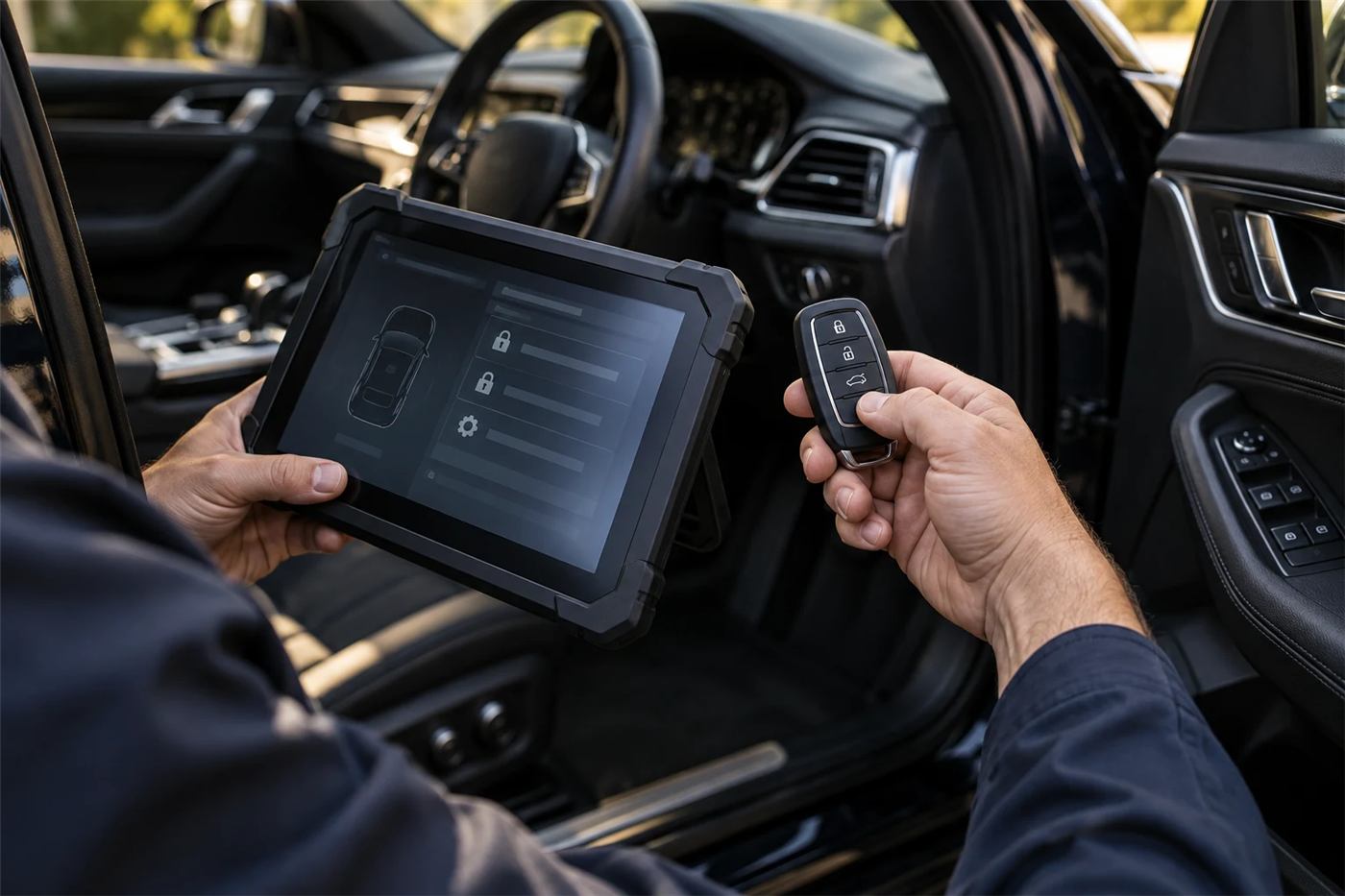
Replacing a proximity fob involves a new fob and programming with a diagnostic tool. The technician needs the vehicle's identification and proof of ownership. Some trucks need a longer process if all keys are lost. See push-button start keys and smart key replacement for details.
Commercial use and multiple drivers
A Silverado used for work often has several drivers. A crew leader, an apprentice and a helper may each handle the truck in a week. Keys change hands, get left on tailgates and fall into trucks beds. The more people involved, the higher the chance that one key is lost.
Business owners should consider a simple system. Keep a record of how many keys exist for each truck and who holds each one. Keep a spare in a secure office cabinet. When a driver leaves, collect their key. If a key goes missing and cannot be found, ask a technician whether the lost key can be erased from the truck's memory when a new one is programmed. On many vehicles it can.
If you manage more than one truck, tell the dispatcher how many are involved, who approves the work and how paperwork is handled. See fleet vehicle key service and locked out of a work truck for related help.
Toolboxes, tonneau covers and other locks
A Silverado often carries extra locks that have nothing to do with the cab key. A bed toolbox, a tonneau cover or a canopy may have its own lock and key. Some are keyed alike to the truck and some are not. The tailgate may lock with the truck's key or by a button on the fob.
When you call, say which lock needs a key. A cab key and a toolbox key are different jobs with different tools. A technician can often cut a toolbox key from the lock, and cab keys come from the truck's data. If you have a tag with a short number for the toolbox, keep it, since it makes cutting simpler.
If you are not sure what lock you have, describe it and take a photo. A small effort at the start saves a second trip.
What happens during a mobile Silverado visit
The technician begins by confirming the truck and your ownership or authorization. The key type is identified, and the correct blank or fob is selected. The blade is cut by machine from the truck's data.
Programming follows. A diagnostic tool is connected to the truck's port, or a timed procedure is used on trucks that allow it. The new key is registered, and existing keys are tested. Bring every key you have, since programming a new one can affect how the truck handles others.
At the end, the technician tests the door, the ignition or start button, the remote buttons, the tailgate release and the remote start if equipped. The visit is complete when everything works. See how key programming works for a plain explanation.
Lost keys, broken keys and no-start trouble
If a Silverado key is lost, check the usual places, then call. A mobile technician can make a new key at the truck, which often avoids a tow. If all keys are lost, it takes longer, but it is still routine for many trucks. See all keys lost car key service.
If a key broke in the door or ignition, do not try to pull the piece out. Tell the dispatcher where it is. If the truck does not start and the security light flashes, the chip or programming may be the cause. If the key will not turn, a worn key or cylinder may be involved.
In each case, a technician can diagnose the problem on site and explain the options before work begins.
Everyday Silverado situations
A few scenes repeat across Houston. A homeowner buys a used Silverado with a single key and a copy. The copy opens the door but never started the truck. When the original disappears into a tackle box or a coat, the owner finds out the spare was never programmed. Testing every key soon after purchase prevents that, and a properly programmed spare gives a real backup.
Another scene is the crew truck at the end of a long day. The driver climbs out, shuts the door and realizes the key is on the seat. The window is up and the doors are locked. That is a lockout, and a technician can open the truck without damage. Calling a supervisor first can sometimes locate a spare, but a mobile visit is often quicker than driving to a yard and back.
A third is the proximity fob that stops being detected after a wet week. Moisture in the case or a weak battery is the usual cause. A battery change fixes some, and a soaked board may need replacing. See key fob water damage for what to try.
A fourth is the older Silverado whose ignition has worn. The key sticks, needs jiggling or will not turn. A new key sometimes helps, and sometimes the cylinder is the issue. Trying a fresh key in the old cylinder is a simple test, and a technician can do it on site.
Adding spares and managing keys for a crew
The easiest time to handle a Silverado key is while you still have a working one. A spare added then is simpler than a replacement after every key is lost. The technician can also test your existing key, check its chip and note wear.
For a crew, a plain system works well. Label each key with a number, keep a short list of who holds which and store spares in a locked office cabinet. When a driver leaves, collect their key. If a key goes missing and cannot be found, ask whether it can be erased from the truck's memory when a new key is programmed.
Do not hide a spare in a magnet box on the frame or in the bed. Thieves know those spots. Keep spares at home or in a secure office. Test them once or twice a year by locking, unlocking and starting the truck. If you replace or add a key, bring every key to the visit so each is registered.
Our guide on where to keep a spare key covers safe places, and why you need a spare key now explains the reasoning in more detail.
Questions to ask before booking truck key work
Good questions protect you and your business. Ask whether the technician verifies ownership or authorization before making a key. Ask whether the key will be cut from the truck's data or copied from a worn one. Ask whether every function will be tested before the visit ends, including remote buttons, the tailgate release and remote start if the truck has it.
Ask how the service call charge works and whether the quote is given before dispatch. At our service, quotes are given by phone only, and the service call charge is explained first. Ask what happens if the job needs an on-site assessment. A clear answer to each question is a good sign.
Our guide on questions to ask before booking lists more, and it applies to any locksmith you consider.
Heat, dust and the toll on truck keys
Houston heat bakes a truck cab. A fob left on the dash can warp, its battery can run down faster and its buttons can dry out. Dust and grit wear blades and clog locks. Moisture finds its way into cases during storms or hose-downs.
Practical habits help. Keep the fob out of direct sun. Replace the battery on a schedule. Keep a spare at home or in an office. A light cover can protect a fob from drops if it does not press the buttons.
If a key feels rough, the lock has become gritty or buttons are failing, replace the key before it fails completely. A planned visit is easier than a lockout on a job site.
Proof of ownership, quotes and calling us
A professional will ask for photo identification and a registration, title or similar document before making a key. For a company truck, bring an authorization from the employer. Have the year, trim and identification number ready, plus any existing keys.
Quotes are given by phone only, and the service call charge is explained before a technician is dispatched. Complicated jobs, such as all keys lost on a late-model truck, may need an on-site visit to assess them.
Call us with your Silverado's year and trim, tell us what has happened and describe your key. We will confirm the key type, explain the process and arrange a visit where the truck is parked.
Questions people ask
What key types do Silverados use?
Silverados have used chip keys, resistor pellet keys on older trucks, remote head keys, flip keys and proximity fobs with push-button start. The type depends on model year and trim. Describe your key and how you start the truck, and the dispatcher will confirm.
Can I get a Silverado key made if every key is lost?
In many cases, yes. The technician confirms ownership, cuts a blade where needed and programs a new key at the truck. It takes longer than adding a key when one still works. The dispatcher explains what applies to your truck on the call.
My toolbox lock is separate from the truck. Can that be keyed too?
Often yes, but it is a different job from the cab key. A technician can frequently cut a toolbox key from the lock itself, or from a short number tag if you have one. Tell the dispatcher which lock needs a key.
How do I stop a lost driver key from being a risk?
On many vehicles a technician can erase an unaccounted key from the truck's memory while programming a new one. This is a good idea if a key may be in someone else's hands. Ask about it when you call.
Why does my Silverado say key not detected?
A weak fob battery is a common cause. Many trucks have a backup spot where the fob can be held so the truck reads it without battery power. Your owner's manual shows where. If that fails, call for a technician to test the fob and the truck.
What proof do I need for a fleet Silverado?
Bring photo identification, the registration or title and an authorization from the company or owner. This is required before programming and protects the truck and the business.
Describe the situation by phone and we will tell you what the job involves. Quotes are given by phone. Jobs that cannot be quoted without seeing them need a technician on site, and the service call charge is explained on the phone before anyone is dispatched.
(713) 574-7660Related pages
Written by Claude (AI) (AI) for Houston Car Key Locksmith.