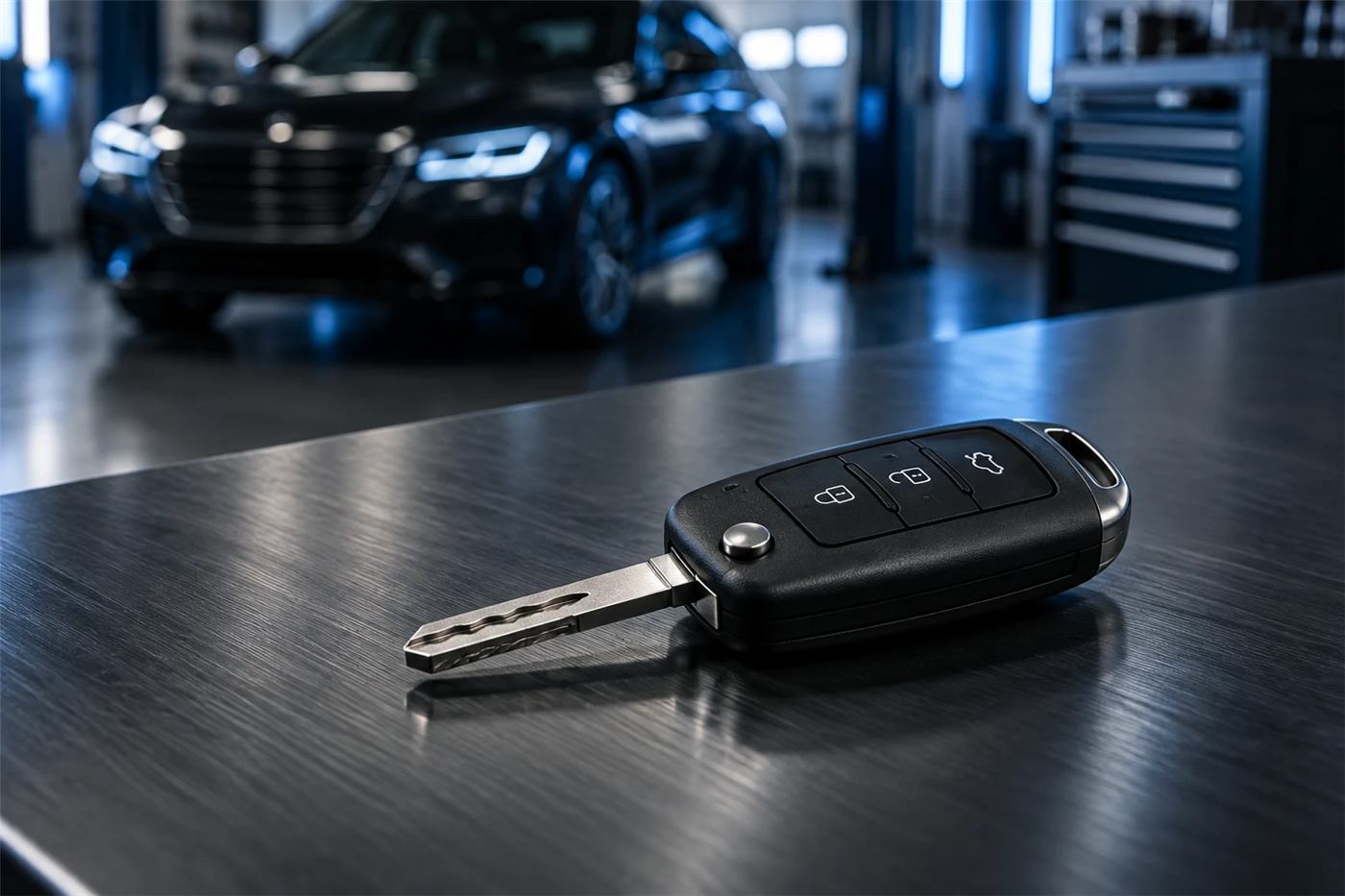
What the ignition cylinder does
The ignition cylinder is the part of the steering column where the key goes in. Inside is a stack of small pins or wafers that line up only when the right key is inserted. When they line up, the cylinder can turn, and the turning moves a switch that powers the electrical system and starts the engine. On many vehicles the cylinder also controls the steering column lock and, in automatics, the shift interlock.
Because the cylinder does a lot of mechanical work, it wears. Every time a key goes in and out, the pins and wafers rub against the key. Years of use, a heavy ring of other keys hanging from the key, and grit and moisture all take a toll. Eventually the cylinder loses the tight fit that keeps it working smoothly, and the symptoms begin.
On modern vehicles the cylinder is only part of the picture. A transponder chip in the key and an immobilizer in the car handle the electronic side. A new cylinder or a rekeyed cylinder fixes the mechanical half. The electronic half may need programming as well. Our page on ignition repair covers the wider set of ignition problems.
Rekeying versus replacing: the basic difference
Rekeying means keeping the existing cylinder and changing the internal pins or wafers so that a different key operates it. The cylinder stays in the car. The inside is reset to match a new key. It is possible when the cylinder is in good mechanical condition and the parts needed to reset it exist.
Replacing means removing the old cylinder and fitting a new one, which comes with its own set of keys or can be keyed to match the keys you already own. This is the better path when the cylinder is badly worn, damaged, or broken, or when the cost of repairing the old one makes less sense than starting fresh.
Both leave you with a working ignition. The choice depends on condition, vehicle, and what you want the keys to do. A technician will look at the cylinder, try the keys, and tell you which route is better for your case. The table below summarizes the differences.
| Question | Rekey | Replace |
|---|---|---|
| Is the old cylinder reused? | Yes | No, a new one is fitted |
| Best when | The cylinder is sound but the keys are wrong or lost | The cylinder is worn, damaged, or failing |
| Keys afterward | New key cut to the reset cylinder | Keys supplied with the new cylinder, or keyed to your existing set |
| Time involved | Often shorter if parts are on hand | May need a part to be ordered for some vehicles |
| Chip programming | Often still needed | Often needed as well |
Signs the ignition cylinder is wearing out
The ignition cylinder fails gradually, and the early signs are worth noticing. If you recognize several of them, it is time to have a technician take a look, ideally before the cylinder fails with the car stuck somewhere inconvenient.
- The key goes in but needs jiggling or lifting to turn.
- The key turns in the cylinder but the car does not start, or starts only when the key is held in a certain position.
- The key will not come out, or comes out only when the steering wheel is moved.
- Dashboard lights flicker or go out when you bump the key or the column.
- A new copy of the key works no better than the old one.
- The cylinder feels loose, wobbly, or sloppy in the column.
- The key leaves metal shavings or a dark residue on the blade.
Theft damage and attempted break-ins
A vehicle that has been targeted by a thief often shows damage at the steering column. A common sign is a column cover that has been cracked or pried open, or a cylinder that has been pulled, drilled, or punched. In some cases the thief did not get the car, but the cylinder is left damaged and the car will not start with the proper key.
If this has happened to your vehicle, do not keep trying the key, and do not attempt to repair the column yourself. Photograph the damage, since you may need it for a police report or an insurance claim. Our guides on police reports for stolen keys and car key insurance claims explain the process.
A technician can inspect the damage and tell you what has to be replaced. Often the cylinder is no longer usable, and a new one is fitted and keyed to your key. Where the column itself has been bent or broken, a deeper repair may be needed, and the technician will say so. The ignition may also need to be checked for damage to wiring behind the cylinder.
Matching door locks and ignition to one key
On many vehicles the ignition and the door locks use the same key. Sometimes they do not. After a cylinder is replaced, the new cylinder may come keyed differently from the doors, which means you end up with one key for the ignition and another for the doors. That is workable but irritating.
A technician can often arrange for the new cylinder to match your existing door key, or for the door locks to be rekeyed to match the new ignition key. The result is one key for everything, which is how most owners expect their vehicle to work. The details depend on the vehicle: some cylinders can be keyed to order, some come in fixed sets, and some require reworking the old cylinder.
If you have a trunk lock or a glove box lock, ask whether those should be matched too. A set of mismatched keys is a recipe for confusion, and a key that only fits one lock is likely to be the one that gets lost. Our page on door lock cylinder repair describes work on the other locks.
Used cars, lost keys and the previous owner problem
Rekeying is also a security step. If you buy a used car and are not sure how many keys exist, you cannot know who else holds one. A previous owner, a family member, or a repair shop could still have a copy. A key that fits the old cylinder may still turn it.
For many modern cars, the better approach is to program a fresh set of keys to the vehicle and erase the old ones from its memory. That deals with the electronic side. On older vehicles without a chip, rekeying or replacing the cylinder is the way to make an old key useless.
The same reasoning applies after a theft. If your keys, wallet, and registration were stolen together, someone has a key and knows where your car is. Having the cylinder rekeyed or replaced, or the keys reprogrammed, closes that door. Our page on key reprogramming after theft goes into the electronic side, and our guide on the used car buyer key checklist lists questions to ask when buying.
What the technician does during the job
The work starts with confirming the vehicle and ownership. A technician checks your ID and proof that the car is yours before touching the ignition, since changing the cylinder changes who can start the car.
Next comes access. On many vehicles the steering column cover is removed to reach the cylinder. Some cylinders are released with a small tool and a turn of the key. Others require a pin or a release screw. Some vehicles also need the battery disconnected, and an airbag system on the column means the technician takes extra precautions. This is not a job for a driveway amateur, since mishandling the column can set off or damage safety systems.
Once the cylinder is out, the technician decides whether to rekey or replace, completes the work, and reassembles the column. The new key is cut, any chip is programmed, and the car is tested: ignition, accessory, start, lock, steering wheel release, and shift interlock if the car has one. You see each function work before the job is done.
Examples of how the decision goes
A commuter has a car with a worn key that now turns only with a wiggle. A fresh key cut to the car's code turns smoothly in the door but still sticks in the ignition. That points to the cylinder, not the key. Because the car has a steering column that gives access, the cylinder is replaced and keyed to match the door key, so one key operates the car again.
A second owner bought a used truck with one key and no history. The truck has no chip, so an old key cut by anyone would still fit. Rekeying the ignition and doors to a fresh key removes any doubt about who else holds a copy. This is a case where the cylinder is perfectly sound and the issue is only trust.
A third owner found the steering column cover pried open after a night in a parking lot. The cylinder is cracked and the key no longer turns it. Here replacement is the only sensible path, and the technician also checks the wiring behind the column for damage. Photographs go with the police report.
In each case the decision follows from the same few questions: is the cylinder sound, what keys exist, and what does the owner want the keys to do. A technician works through them with you at the vehicle, and explains the reasoning so that the decision is yours.
What happens to the old keys
After a rekey or a replacement, the old keys should no longer operate the ignition. This is the point of the work when the concern is who else holds a key. A rekeyed cylinder has been reset to a different pattern, so a key cut to the old pattern no longer lifts the pins into line. A replacement cylinder, with its own pattern, has the same effect.
If the vehicle also has a chip system, the old chips may still be recognized by the immobilizer unless they are removed from the car's memory. A technician can often clear the old keys during programming, so that only the new ones work. That step is worth asking about when security is the reason for the work.
Hand over any old keys you want to keep for records, and dispose of the rest. A key that no longer fits any lock on the car is harmless, but a key that still opens the doors even if it cannot start the engine can still let someone into the cabin. If the door locks were not changed, ask about them. Keys for doors, trunk, and glove box can be matched or changed during the same visit.
Keep a record of the keys that exist and where they are. A small note with the number of working keys and who holds them takes a minute to write and saves guesswork later.
Why DIY ignition work is a risk
Owners sometimes try to replace a cylinder with a part from an online store. The risks are real. The steering column on many cars holds airbag components, and a mistake can cause damage or injury. The cylinder may be locked in place by a design that needs a specific procedure to release. A cylinder bought online may not match the vehicle's key system, or may be for a different year.
There is also the matter of the immobilizer. A new cylinder on a car with a chip system may not start the car without programming, and a car that has been disassembled and does not start is harder to sort out than one left alone.
We do not give step-by-step instructions for removing a cylinder on this site, because the safest outcome comes from a trained technician with the right tools. If you suspect your cylinder is failing, the best step you can take is to stop using a damaged key, avoid forcing it, and call for advice.
What to have ready and how quotes work
Have the year, make, and model, and the VIN. Say what the symptoms are, how many keys you have, and whether any still work. If there has been a break-in or theft attempt, describe the damage. Have your ID and proof of ownership available.
Quotes are given only by phone. We do not publish prices on this site and do not give ranges without knowing the vehicle. Ignition work often needs an on-site look before a firm number can be given, and in those cases a service call charge applies, explained on the phone before anyone is dispatched. We cannot promise arrival windows.
Service is mobile across the Houston area, so the work is done where the car is parked. Call, describe what the ignition is doing, and we will tell you what the technician will need and what the likely options are.
Questions people ask
What is the difference between rekeying and replacing an ignition cylinder?
Rekeying keeps the old cylinder and resets its internal pins or wafers to match a new key. Replacing fits a new cylinder. Rekeying suits a sound cylinder with the wrong keys. Replacing suits one that is worn, damaged, or failing. A technician looks at it and tells you which is better.
Will I need new keys after the cylinder is changed?
Usually you receive new keys cut to the new or reset cylinder. Sometimes the new cylinder can be keyed to match your existing key. If your car has a chip, the key may also need programming. A technician will explain what applies to your vehicle before starting work.
My key is hard to turn. Is the cylinder failing?
Possibly, but the key may be worn or bent instead. A technician can try a fresh key to tell the difference. If a new key turns smoothly, the old key was the problem. If both feel rough, the cylinder is wearing. Stop forcing it and describe what happens.
Can the doors and ignition use the same key afterward?
Often yes. A technician can match a new cylinder to your door key, or rekey the doors to match the ignition. The options depend on the vehicle. Ask about the trunk and glove box locks too if you want every lock on one key.
Should I rekey a used car I just bought?
It is a sensible step if you are unsure how many keys exist. On chip-equipped cars, programming a fresh set and erasing old keys from memory may be enough. On older cars, rekeying or replacing the cylinder makes old keys useless. Ask on the phone which suits your car.
Can I replace the ignition cylinder myself?
It is not recommended. Steering columns can hold airbag parts, cylinders can be hard to release, and a new cylinder may need programming to work with the immobilizer. A trained technician has the tools and training to do it safely and to test everything before leaving.
Describe the situation by phone and we will tell you what the job involves. Quotes are given by phone. Jobs that cannot be quoted without seeing them need a technician on site, and the service call charge is explained on the phone before anyone is dispatched.
(713) 574-7660Related pages
Written by Claude (AI) (AI) for Houston Car Key Locksmith.