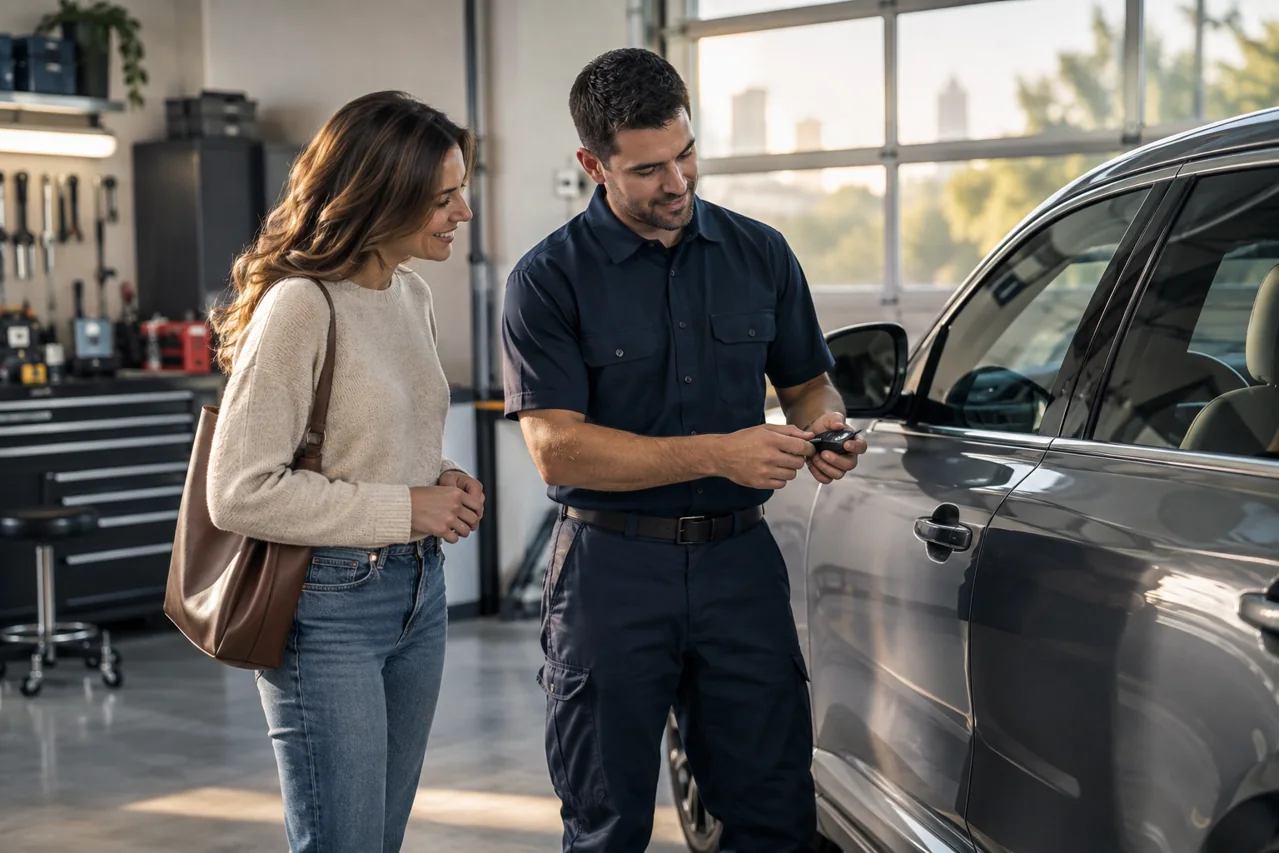
Why proof of ownership is part of every key job
A key is the most direct way to take a vehicle. Anyone holding a working key can open it, start it and drive it, with no forced entry and no alarm. A new key made for a stranger would be as powerful as the original, and for that reason responsible technicians do not make keys on a request alone. They check that the person asking is entitled to have one.
The same logic applies to a house. A reputable locksmith will not open a door for someone who cannot show that the home is theirs. For vehicles, the rule is the same. The technician needs reasonable proof that the car is yours or that you have the owner's permission to act.
Owners sometimes feel awkward at being asked, especially if the car is sitting in their own driveway. It helps to think of it from the other side. If someone were to ask a technician to make a key for your car, you would want them to ask questions. The same process that slows you down for a few minutes keeps your car safe from everyone else.
The documents usually asked for
The standard set is simple: a government-issued photo identification, and a document that links you to the vehicle. The photo identification shows who you are. The document shows that the vehicle belongs to you or that you are authorized to use it. The two together tell the technician that the person in front of them is connected to the car in front of them.
For the link, the best document is the vehicle title, since the title is the legal record of ownership. A current registration is also widely accepted, since it lists the registered owner and the vehicle identification number. A bill of sale, a lease agreement or loan papers can help in some situations, especially for a recently bought car where the title has not yet arrived.
The technician will compare the vehicle identification number on the paperwork with the number on the car and the name on the paperwork with the name on your identification. If everything matches, the work can proceed. Our guide on what your VIN has to do with a replacement key explains why that number matters.
- Government-issued photo identification.
- Vehicle title or current registration.
- For a new purchase: bill of sale or purchase paperwork.
- For a lease or loan: agreement showing your right to use the car.
- For a business vehicle: paperwork showing your authority.
What if the car is a company vehicle
Company cars add a layer. The registered owner is the business, and the person asking for the key is an employee or a manager. A technician needs to see that the person has the authority to request a key. That may be a letter on company letterhead, a work order, an authorization from a fleet manager or a document that lists the person as an authorized driver.
Fleet vehicles usually come with a process. Many companies have a policy for lost keys, and the person on site may need to call a manager first. If you work for a company with several vehicles, find out the procedure before a key goes missing. It is far easier to have an authorization on file than to hunt for it at the roadside.
Our page on fleet vehicle key service describes how businesses can prepare. If you are a business owner, consider keeping a folder with titles, registrations and a short note naming who may authorize key work.
Family vehicles, borrowed cars and shared ownership
Not every car sits in the name of the person driving it. Parents may own the car a teenager uses. A spouse may be the registered owner while the other drives daily. A relative may have lent a car for a long period. Each of these situations has a straightforward answer if you plan for it.
For a spouse or family member who is not named on the registration, the technician will usually want to see the owner's identification and paperwork, or a way to confirm the owner's permission. A phone call with the registered owner on the line can help in some cases. Written permission with a copy of the owner's identification is another route.
If the car belongs to a relative who is out of town, ask them to send photos of the title or registration and their identification, and to confirm permission in writing. Technicians have to be careful here, since a story about borrowing a car is also a common story used by someone with bad intentions. A calm, documented request is the best way to avoid delay. Our guide on the teen driver spare key covers a related case.
Recent purchases, lost paperwork and other awkward situations
Some situations are common and manageable. If you just bought a car and the title has not arrived, a bill of sale and the temporary registration or tag paperwork may be enough, together with your identification. If you bought from a private seller, bring the signed title or whatever you were given.
If you have lost your paperwork, there are ways forward. You can often get a copy of your registration through the state motor vehicle service, and many insurers provide a digital card with the vehicle identification number. A technician may accept a combination of documents, such as an insurance card and a photo identification, but is not obliged to. Lack of paperwork may mean the job has to wait.
If a car has been abandoned, inherited or acquired in an unusual way, the technician may need more documents, such as court paperwork or a letter from an estate. These cases take patience. It is better to start gathering documents early than to ask for a key at the last minute.
What happens if you cannot show proof
A responsible technician will not make a key without proof. That can be frustrating when you are stranded, but it is the right outcome. A technician who skipped the check for you would skip it for someone else, and your car is exactly the kind of vehicle that could be the target of that someone.
If you cannot show proof at the visit, the technician will explain what is missing and how to resolve it. Often the fix is simple: a photo of the title sent by a family member, a registration copy from an app or a call to an insurer for a digital card. If you can solve it quickly, the visit may be completed the same day.
If the problem cannot be solved quickly, the technician may leave and return when you have documents. A service call charge may apply for a visit that could not be completed, which is explained on the phone before dispatch. The simplest way to avoid trouble is to gather your documents before you call.
How the check protects you
The ownership check is not only about stopping criminals. It also protects you from mistakes and from disputes. A key made for a car that turns out to belong to someone else can lead to legal trouble for everyone involved, including the person who asked for it. Careful technicians keep records of whom they served and what documents were shown, which can help if questions arise later.
It also protects against scams. Be careful of anyone offering to make keys without asking for documents, and be careful of anyone who asks you to pay in unusual ways. Our guide on car key scams to avoid describes warning signs. A professional who asks you for proof is showing that they take the work seriously.
Finally, the check protects the integrity of your own vehicle. When a technician programs a key and records the work, you are left with a car whose key list you understand. Combined with the option to erase lost keys, the process closes a door that might otherwise stay open.
Leased, financed and rental vehicles
Not every driver holds the title. If your car is financed, the lender may hold the title until the loan is paid, while you hold the registration. In that case the registration, together with your identification, is usually the document that links you to the car. If the registration lists you as the owner of record, a technician can generally work from it.
Leased cars are different again. The leasing company owns the vehicle, and you are the authorized driver. Technicians often ask to see the lease agreement or a letter from the leasing company, and some leases require the company to approve key replacement. It is worth reading your agreement, since it may spell out who is responsible for keys and what happens when one is lost.
Rental cars are a separate case. A rental belongs to the rental company, and a lost key should be reported to them straight away. They usually have a process and may arrange the replacement themselves. Our page on the rental car key lost situation explains what to do and what to avoid. Having a technician make a key for a rental without the company knowing can breach your agreement.
In every one of these cases, the principle is the same. Show who you are, show your link to the car and be open about the situation. A technician who hears the full story can advise you on the cleanest route and help you avoid a second visit.
Preparing before you call
A little preparation turns the process into a quick exchange. Take a photo of your title and registration and keep it in your phone, in a folder you can find. Keep your identification in your wallet. Know the vehicle identification number. If a family member or employer is involved, tell them in advance that a technician may call or ask for documents.
When you phone, mention the situation: the car, the number of keys left, where the car is and who owns it. If the owner is not you, say so at the start. That helps the person on the phone tell you what will be needed and avoids a wasted trip.
Quotes are given only by phone, and a service call charge is explained before a technician is dispatched. Complicated jobs may need an on-site visit first. When you are ready, call the number on this page. We will tell you what to have ready and answer any questions about the process.
A simple checklist for the visit
On the day, expect a short, polite exchange at the start of the visit. The technician introduces themselves, asks to see your identification and paperwork, compares the vehicle identification number and then begins. If anything is missing, they will tell you plainly. If everything is in order, the work proceeds, and you can ask questions along the way.
It also helps to bring every key you still have, working or not, and any key-related paperwork such as a spare key card. Some cars come with a card that carries a code for the key, and that card can speed up the job. If you do not have it, that is fine, and the technician will use other methods.
After the work, expect a clear summary. You should know how many keys the car now accepts, whether any lost keys have been erased and whether anything else needs attention. Keep a note of this for future reference, and store your documents safely so you can find them next time.
Questions people ask
Why do I have to prove I own my own car?
A replacement key can open and drive the car, so technicians must be sure the request is genuine. The same check protects you from anyone trying to get a key to your vehicle. It usually takes only a few minutes and involves photo identification plus a title or registration that matches the vehicle identification number.
What documents are accepted?
Photo identification plus a title or current registration is the standard combination. A bill of sale, lease agreement or loan paperwork may help in some situations, such as a recent purchase. Business vehicles need paperwork showing your authority. The technician checks that the names and the vehicle identification number match.
Can I get a key for a car that is in my spouse's name?
Often yes, with extra steps. The technician may want to see the owner's identification and paperwork, or confirm permission by phone or in writing. Having the owner send photos of their documents ahead of the visit makes it easier. Explain the situation at the start of the call so you know what to prepare.
What if I lost my registration and title?
You may be able to get a copy through the state motor vehicle service, or show a digital insurance card that lists the vehicle identification number. Whether that is enough is up to the technician. Gathering documents before you call avoids delay, and the person on the phone can tell you what might work.
Will the technician refuse if I cannot prove ownership?
A responsible technician will not make a key without proof. They will explain what is missing and how to fix it, and can often return once you have the documents. A service call charge may apply for a visit that could not be completed, and that is explained on the phone before anyone is dispatched.
Does this apply to a lockout as well as a new key?
Yes. Technicians check that the person asking for entry has a right to the vehicle, and ownership is part of that. Photo identification and a title, registration or similar document are the usual proof. If a child or pet is inside a hot car, call emergency services first, because they can act immediately.
Describe the situation by phone and we will tell you what the job involves. Quotes are given by phone. Jobs that cannot be quoted without seeing them need a technician on site, and the service call charge is explained on the phone before anyone is dispatched.
(713) 574-7660Related pages
Written by Claude (AI) (AI) for Houston Car Key Locksmith.