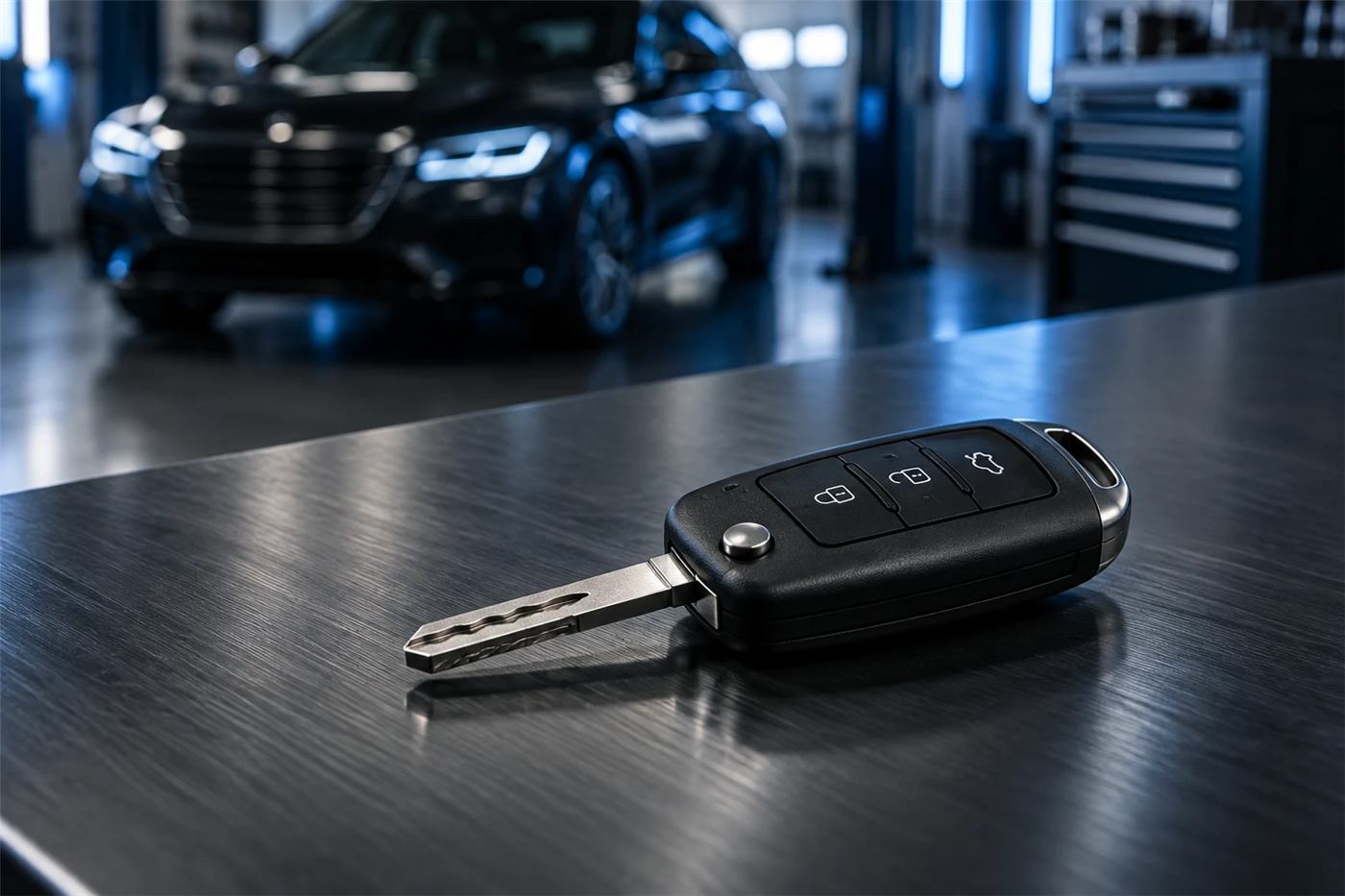
Long-lived cars and aging keys
Subaru owners have a reputation for holding on to their vehicles, and a car that lasts for many years will outlast the keys that came with it. A key that has been used daily for a long time shows its age. The blade wears, the rubber buttons crack, the battery contacts loosen and the case may split. A key that seems fine can suddenly fail on a day when you can least afford it.
Aging also affects spares. A second key tucked in a drawer or a glove box may have been forgotten for years. When it is finally needed, it may have a dead battery, a corroded contact or a damaged case. Testing the spare is part of caring for the car, not an afterthought.
In the Houston area, Subarus are common in suburbs and in neighborhoods near the Heights, Bellaire and the Woodlands. Owners often use them for commuting, school runs and weekend trips. Whatever the use, the same advice holds: know what key you have, know where the spare is and replace worn parts before they fail.
Key types across the Subaru lineup
Subaru keys fall into a few families. Older and base vehicles often use a transponder key with a cut blade and a chip, sometimes with a separate remote. Many mid-generation vehicles use a remote head key, with buttons built into the key head. Newer and upper trim vehicles use a smart key, which allows keyless access and push-button start.
The family depends on the model, the year and the trim. An Impreza from one generation may use a different key from an Impreza of another, and an Outback with a base trim may use a different key from a top trim in the same year. A technician needs the model, the approximate year and a description of how you start the car.
- Transponder key: cut blade with a chip, vehicle starts by turning the key in the ignition.
- Remote head key: buttons built into the head, blade and chip combined in one piece.
- Smart key: proximity fob with push-button start and a hidden emergency blade.
- Dealer-supplied or aftermarket shells: some shells can be swapped while the electronics are kept, depending on the key.
Outback: the family wagon and trail vehicle
The Outback is a staple of Houston neighborhoods, and keys on newer models are often smart keys. Families use them for school, sports and trips, so the fobs are handled by many hands. They are dropped in parking lots, left on kitchen counters and sometimes tossed in a bag with other items.
A common Outback call is that a fob has stopped working and the other one is nowhere to be found. If one fob still works, the technician can use it to help program a new one, and the job is simpler. If none work, the vehicle needs an all keys lost approach, which requires proof of ownership and a longer visit.
Owners who carry bikes, kayaks or cargo on roof racks should also remember that roof rack locks may use their own keys. These are not part of the vehicle's immobilizer system, but they are worth thinking about when you are replacing keys. Our page on spare key duplication covers how a copy is made when you still have a working key.
Forester and Crosstrek: compact SUVs
The Forester and Crosstrek share a compact SUV role, and their keys vary by year and trim. Many are smart keys, but base models may use a more traditional key. Both are popular among drivers who spend time outdoors, which means their keys see weather, sand, mud and water.
Fobs that get wet are a recurring problem. A fob that goes through a creek crossing in a pocket, a day at the lake or a wash cycle may keep working for a while and then fail. If a fob has been soaked, let it dry in open air, avoid heat sources and have it tested. Our page on key fob water damage explains what is worth trying.
Owners who hike, camp or fish should also think about where the key goes during activities. A small waterproof pouch, a lanyard clipped inside a pocket or a spare key kept in a safe location reduces the risk of a lost or damaged key far from home.
Impreza, Legacy and the sedan line
Subaru sedans such as the Impreza and Legacy serve as commuter cars and family cars. Their keys vary with the generation. Many use remote head keys or smart keys, and older ones use plain transponder keys.
The typical failure patterns are familiar. A blade wears and sticks in the ignition. A key head cracks. A fob loses its buttons. For these jobs, a mobile technician can usually handle the work at the vehicle, cutting a blade where needed, replacing a shell if appropriate and programming the key.
If an older key is worn, it is wise to replace it before the ignition cylinder is also damaged. A worn key can drag on the cylinder's internal parts, and the combination can wear both. Our page on worn out keys describes what to look for and why it matters.
How smart key access works
A Subaru smart key lets you unlock the doors by touching or pressing a handle button and start the engine with a push button. The fob stays in a pocket or bag. The vehicle sends a short-range signal, and the fob answers with an identity the vehicle accepts.
Inside the fob are a battery, a board and an antenna. When the battery weakens, the range shrinks, and the vehicle may show a message. When the board is damaged by water or impact, the fob may fail suddenly or work only sometimes. Replacing the battery is the first step, and the owner's manual explains a backup start method for a weak fob.
A replacement fob must be paired to the vehicle. A technician connects diagnostic equipment, registers the fob and tests it. Our page on smart key replacement explains the process, and our guide to transponder versus smart keys explains the difference.
Programming flows and what to expect
The programming of a Subaru key has several stages. First, the technician identifies the key family and the vehicle's security system. Second, if no working key exists, the technician obtains the information needed to create a key, which requires proof of ownership. Third, the blade is cut if needed. Fourth, the chip or fob is registered with the vehicle using diagnostic equipment.
Some Subaru models allow existing keys to be used to help add new ones, which simplifies the work. Others require the technician to connect to the vehicle and complete a security procedure. Either way, the job is done by someone with the right tools, and owner attempts to shortcut the process often cause delays.
Our guide on how key programming works describes the stages in plain English. The takeaway for owners is that programming is a sequence of verification and registration, not a trick, and a prepared technician moves through it steadily.
Ownership proof and paperwork
Before any key is made, a responsible locksmith confirms that you own the vehicle. The standard documents are photo identification and a registration or title that matches the vehicle information. If the vehicle is leased or owned by a business, bring a lease agreement or a letter, along with identification.
This step protects you. A key to your vehicle in the wrong hands is a serious risk, and a technician who skips verification is not a technician to trust. If you do not have paperwork at hand, say so on the phone, and the dispatcher can explain what alternatives may be accepted.
Our page on proof of ownership for keys covers acceptable documents in detail. Gather them before the visit, and have the vehicle information ready, including model, approximate year, trim and the key type you used.
Habits that protect Subaru keys
A few habits help keys last. Replace the fob battery when the vehicle warns, not when the fob fails. Keep fobs away from water, direct sun and heavy keychains. Avoid using the blade as a tool. Store a spare away from the vehicle, and test it from time to time.
If your car has several drivers, decide where the spare lives and who is responsible for it. If you sell the car, hand over all keys, and consider clearing any keys you no longer control from the vehicle's memory. Our guide on selling a car key reset explains why.
When you are ready to arrange a replacement or a spare, call, describe the vehicle and ask what the visit will involve. The dispatcher explains any service call charge before sending a technician, and quotes are given only by phone.
What a mobile visit looks like
A visit begins with a quick conversation to confirm the vehicle and your documents. The technician tests any existing key and decides what is needed. If a blade is required, it is cut on site. The new key or fob is programmed, and the technician tests starting, locking and unlocking, and any extra functions.
If a lost key needs to be removed from the vehicle's memory, that happens next. The technician explains what was done, and you receive the keys. Most visits happen in a driveway or parking lot, and the vehicle does not need to move.
Complicated situations, such as a damaged ignition or an unusual security setup, may need an on-site look before a quote can be given. That is normal, and the dispatcher will explain it when you call.
Example calls from Subaru owners
An Outback owner returns from a weekend at a lake house and finds that the smart fob is no longer in the bag. The car is at home, and the second fob lives in a drawer that turns out to hold a dead battery. The technician replaces the spare's battery, tests it, finds it still pairs, and then makes a new fob to restore a proper pair. The owner now knows to test the spare once a year.
A Forester owner notices that the key turns with resistance and the engine sometimes fails to catch. The technician checks the key and the ignition. The blade is worn and the cylinder is dirty. A new key is cut, the cylinder is cleaned and the problem resolves. Had the owner waited, the cylinder might have needed replacement.
An Impreza owner buys a used car with one key and a story that the other was lost. The technician programs a new key and clears any old keys from the vehicle's memory, so the missing key can no longer start the car. The owner gains a spare and some peace of mind in a single visit.
When the problem is not the key
Starting trouble does not always come from the key. A weak vehicle battery can cause warning lights, a slow crank and key messages, and replacing a fob will not fix that. A failing starter can produce clicks that sound like an immobilizer problem. A failing ignition switch can make a good key seem bad.
A technician tests the simple things first. If the key is recognized and the engine still does not start, the discussion moves to battery, fuel or spark, and the honest answer may be that a mechanic is the right next call. That is better than replacing parts that were not at fault.
Describe what you see and hear: whether the dash lights come on, whether the engine cranks, whether a key light blinks and what happened just before. A clear description helps the dispatcher decide whether a key visit is likely to solve the problem.
Safe steps to take while you wait
While you wait for a technician, a few steps are safe. Try any other key or fob you have. Check that the vehicle is in park and that the brake is pressed for a push-button start. Note any dash message word for word. Move the vehicle only if it is safe and the key allows it.
Avoid forcing the ignition, prying at the steering column or using tools on the lock. Those actions can damage parts that would otherwise be fine and can lengthen the repair. Avoid repeated rapid attempts to start, since some systems lock out for a period after several failures.
If you are in a location that feels unsafe, move to a lit and populated place and tell the dispatcher where you are. If anyone is in danger, call 911 first. Otherwise, call and describe the situation, and the dispatcher will explain the next steps.
Questions people ask
Can I replace a Subaru smart key if I lost the only one?
Usually yes. After verifying ownership, a technician can create and pair a new fob using diagnostic equipment. The job is more involved than copying a working key, so expect a longer visit. Describe the model and year on the phone so the dispatcher can explain what the visit will involve.
My Forester fob got wet. Is it ruined?
Not necessarily, but moisture can cause corrosion that appears later. Let the fob dry in open air, avoid heat sources and have it tested before you rely on it. A technician can check the board and battery contacts and tell you whether it can be saved or should be replaced.
Does my Outback need a fob battery or a new fob?
Start with the battery, since a weak coin cell is the most common cause of range problems and warning messages. If a fresh battery does not help, the board may be damaged or the fob may have lost its pairing. A technician can test it and tell you which it is.
Can a technician use my working key to make a spare?
Yes, and it is the simplest way to add a key. A working key gives the technician something to match and often makes programming smoother. If you have only one key, make a spare soon, since losing it later turns a small job into an all keys lost service.
Do I have to tow my Subaru to get a key made?
In most cases no. A mobile technician comes to where the car is parked and works with portable equipment. Unusual situations such as a damaged ignition may change the plan, but the dispatcher will tell you honestly what is possible when you describe the problem.
How are Subaru key quotes given?
Quotes are given only by phone, since the cost depends on the model, key type and whether you have a working key. The dispatcher also explains the service call charge before sending a technician. Complicated jobs may need an on-site visit first. Call with your details and ask questions before agreeing.
Describe the situation by phone and we will tell you what the job involves. Quotes are given by phone. Jobs that cannot be quoted without seeing them need a technician on site, and the service call charge is explained on the phone before anyone is dispatched.
(713) 574-7660Related pages
Written by Claude (AI) (AI) for Houston Car Key Locksmith.